Educational Video on Residential Schools and Indigenous History
As a Resident Advisor, I created an 8‑minute educational video on residential schools and Indigenous history in Canada for my dorm community. My goal was to provide accessible, accurate information and create space for learning and reflection. This artefact demonstrates my commitment to truth and reconciliation, my ability to teach in diverse settings, and my confidence in presenting complex topics in a developmentally appropriate way. It also reflects my values as an Indigenous educator and my belief that education can correct misunderstandings and build awareness.
https://canva.link/m2jcichkslr65gi
Place-Based Learning Screen Recording
This slideshow outlines a place‑based learning field trip to the Chase & District Museum, designed to help students explore local history, land, and community through authentic experiences. It includes historical and Indigenous context, curricular competencies, FPPL connections, an inquiry question, student activities, and field trip considerations. The project demonstrates my ability to design meaningful, land‑centered learning rooted in Secwepemc territory and local community stories.
Creating this place‑based learning assignment helped me understand how deeply students benefit from connecting learning to the land and community around them. By grounding the field trip in Secwepemc territory and local history, I learned how to design experiences that honour Indigenous presence, encourage inquiry, and help students see themselves within community narratives. Developing the artifact‑based activities strengthened my ability to support observation, questioning, and multiple perspectives. This project affirmed my commitment to experiential learning that is relational, culturally respectful, and rooted in place. It reflects the kind of teacher I strive to be: thoughtful, community‑connected, and land‑honouring.
Circle of Courage – Belonging Worksheet (Practicum)
This worksheet was used in a practicum lesson to help students explore the concept of belonging through the Circle of Courage framework. Students reflected on the four quadrants—Belonging, Mastery, Independence, and Generosity, and used the prompts to identify moments when they felt safe, seen, or strong. The activity supported social‑emotional learning and encouraged students to connect their personal experiences to classroom community values.
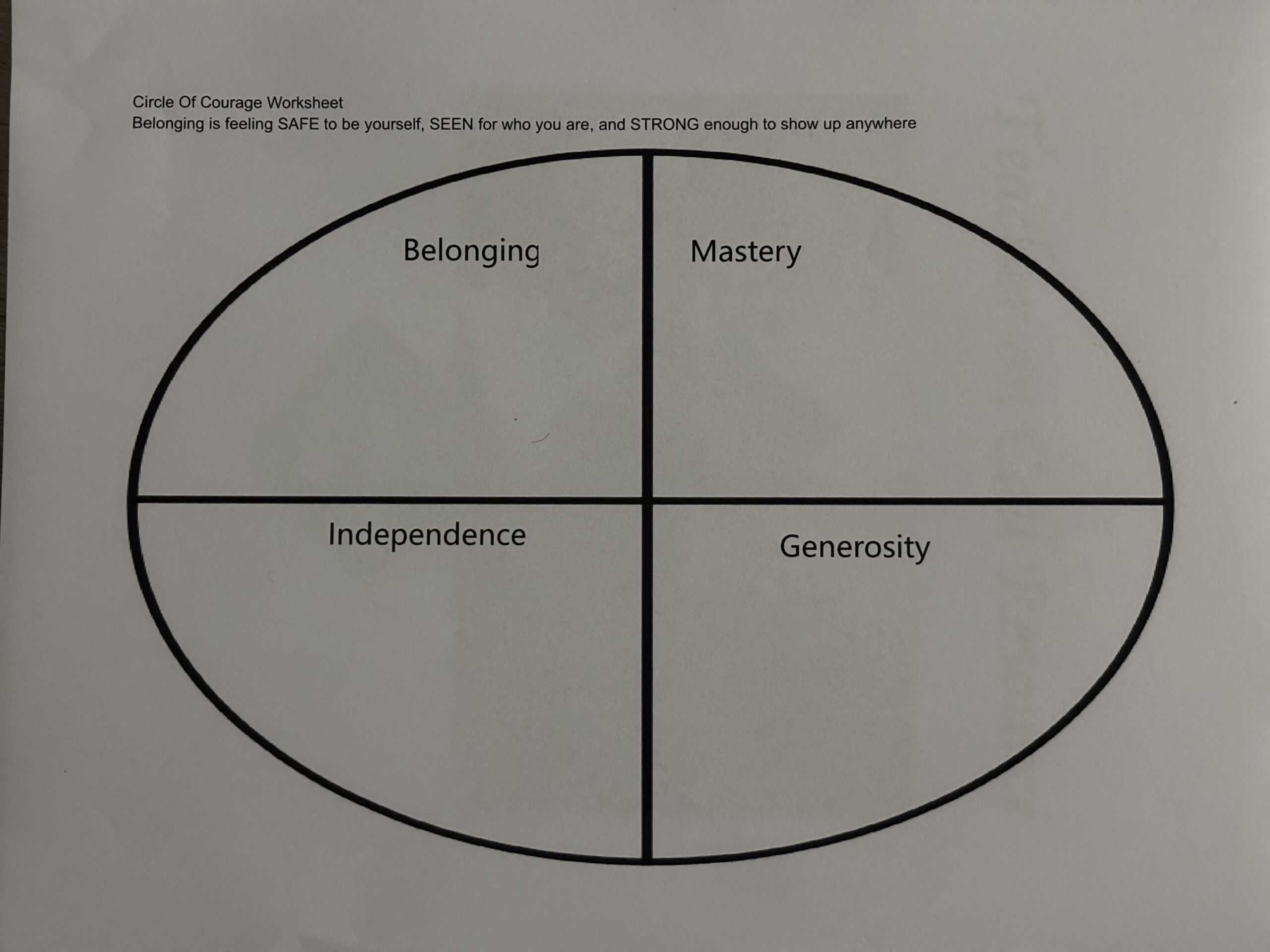
Using this worksheet in my practicum allowed me to guide students through a meaningful reflection on what belonging feels like in their lives. The Circle of Courage framework provided a culturally grounded structure that helped students articulate their strengths, challenges, and emotional needs. I saw how powerful it was for students to name moments when they felt safe, seen, or strong, and how this opened space for empathy and connection. This artifact represents my commitment to creating emotionally safe, inclusive learning environments where students can explore identity and community. It also reflects my growing practice in integrating Indigenous-informed approaches into everyday teaching.
Genres and Text Types in Early Literacy (Poster)
This poster summarizes key concepts from Stead & Hoyt and Woloshyn et al. about teaching nonfiction reading and writing in early primary grades. It highlights the importance of introducing informational text early, outlines the five nonfiction text structures, and explains genre purposes for young writers. The poster is designed as a teacher‑friendly reference tool that supports planning, instruction, and scaffolding in K–2 literacy classrooms.
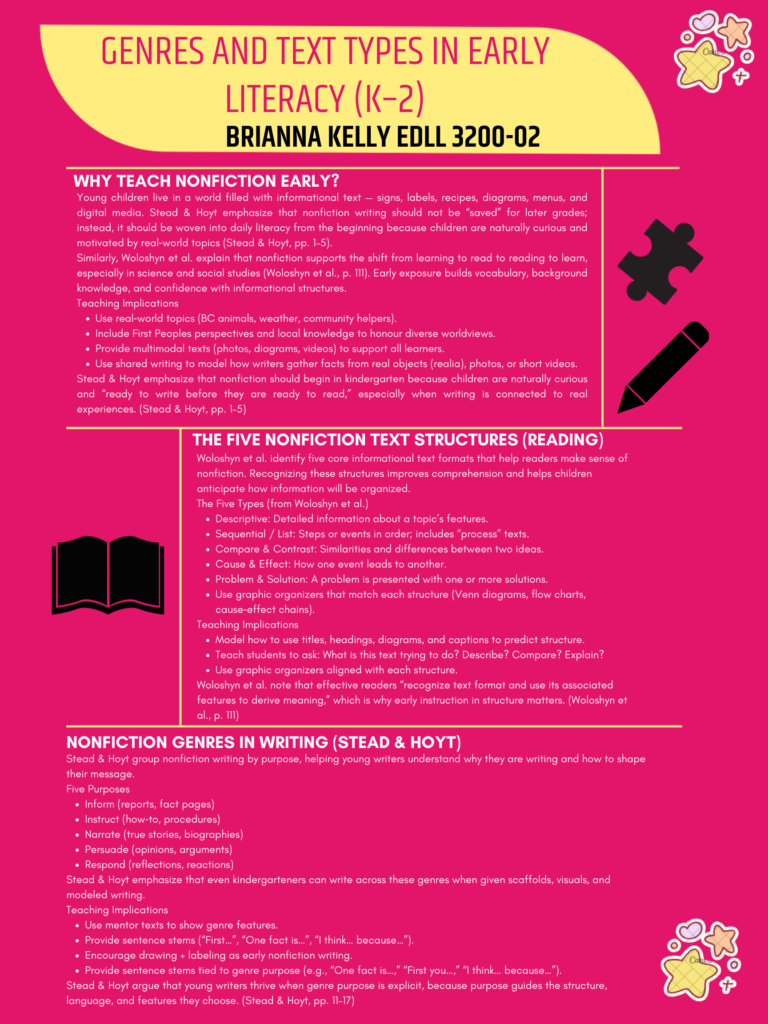
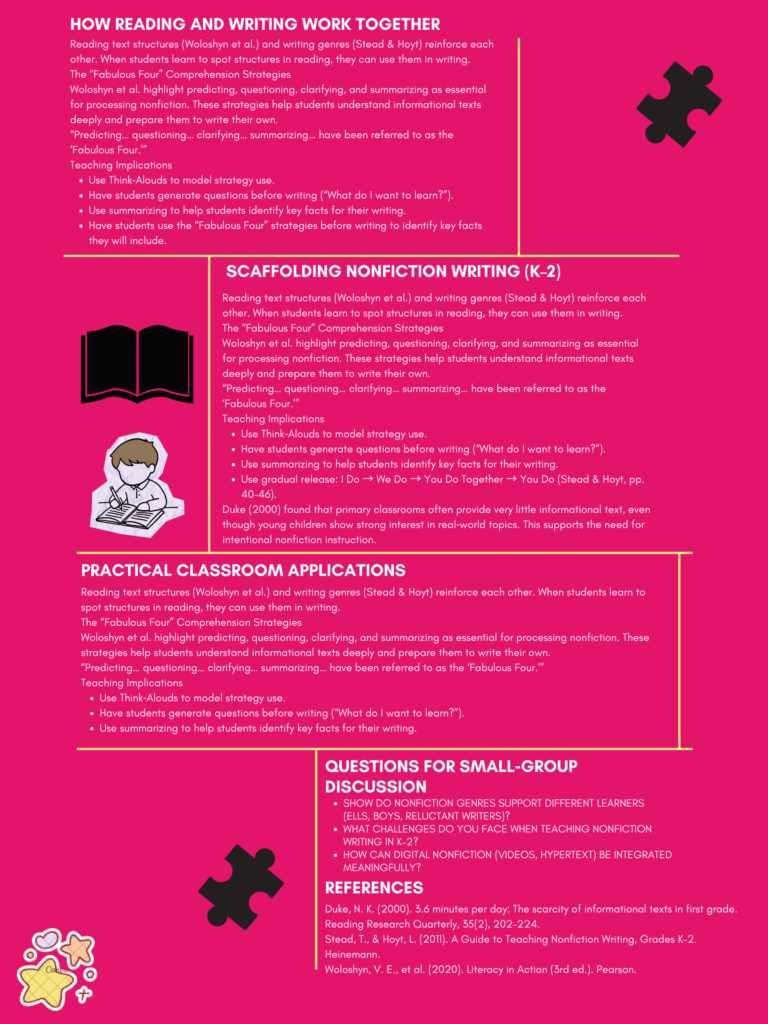
Creating this poster helped me deepen my understanding of how nonfiction reading and writing develop together in early literacy. Synthesizing research from Stead & Hoyt and Woloshyn et al. showed me how important it is to expose young learners to informational text early, especially through multimodal resources and explicit instruction in text structures. Designing the poster pushed me to think about how teachers can make nonfiction accessible, engaging, and culturally responsive. This artifact reflects my ability to translate theory into practical classroom tools and demonstrates my commitment to supporting diverse learners through clear scaffolding and purposeful literacy instruction.
“What Do You Do With a Chance?” Journal Activity
This journal activity was created as a follow‑up to the picture book What Do You Do With a Chance? Students were invited to write or draw about a time they took a chance or missed one, reflecting on their feelings and what they might do differently next time. The activity supports social‑emotional learning by helping students explore courage, self‑awareness, and personal growth through storytelling and reflection.
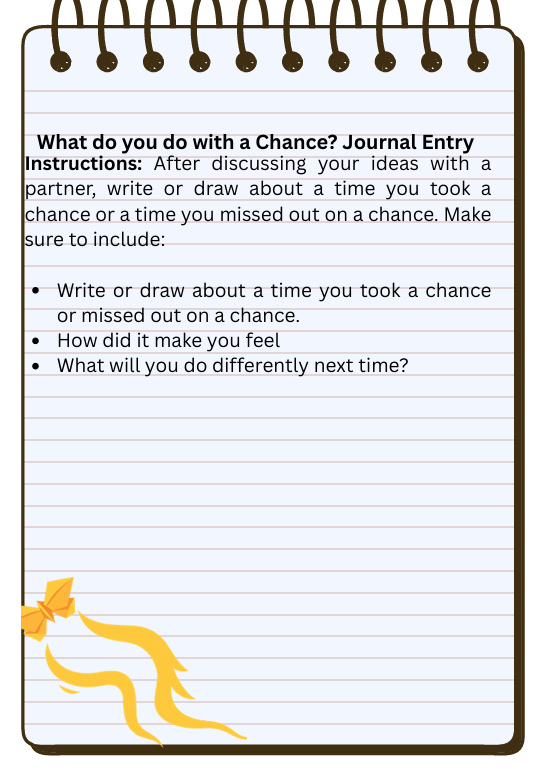
This activity allowed me to support students in developing self‑awareness and emotional literacy through literature. After reading What Do You Do With a Chance?, students connected the story’s message to their own experiences, which led to thoughtful conversations about courage, regret, and resilience. Designing this journal prompt helped me see how reflective writing can create space for students to process emotions in a safe and meaningful way. It also reinforced the importance of offering multiple modes of expression, drawing or writing, to support diverse learners. This artifact reflects my commitment to fostering emotional safety, reflection, and personal growth in the classroom.